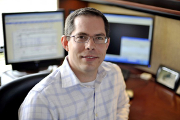
 Discovering meaning in a massive amount of random-seeming data is nothing new to Todd Edwards, PhD, a genetic epidemiologist. His career has made meaning out of many disparate parts, beginning with six years in the US Army as a Print Journalist, pre-med and biology classes in college, and a job in biotech developing kits to sequence human drug metabolism genes, all of which eventually led to a master’s degree in applied statistics and a PhD in genetics at Vanderbilt. Or, as he puts it, “I stochastically wandered through life and ended up here.”
“Here” is PI of an R21 investigating genetic causes of high blood pressure in African Americans and co-PI of a U01 examining calcium-gene interactions in colon cancer, as well as a strong collaborator with his wife, Digna Velez Edwards, PhD, working to understand the genetics of uterine fibroids. As if that weren’t enough, he is also the Associate Director of Graduate Studies for Vanderbilt’s PhD program in epidemiology.
Although busy, he says it’s the most fun he’s had in his career. “Now is an optimistic time to be a geneticist at Vanderbilt,” he says, citing the hiring of Dr. Nancy Cox, who recently arrived from the University of Chicago to head the genetics institute. And he and Dr. Velez Edwards “have had some successes”—both were on K awards and became independent investigators in the last year—and expect more in the near future. Dr. Edwards recently finished evaluating a new statistical method he developed to detect genetic variants with effect modifiers through effects on trait variability. “We believe the approach is really interesting and is one that people will want to use,” he says. At the same time, the fibroids team is in the middle of analyzing an immense amount of genetic and imaging data from BioVU and a network of collaborators across the country. “No one has ever even come close to the magnitude or the quality of the data that we have for this analysis, so we really expect to make some novel discoveries,” he notes. These discoveries may include an explanation for why African American women have a much higher incidence of fibroids than women of other ethnicities, a question researchers have been asking for some time.
Of course, it’s not always been so fun. Dr. Edwards had to submit many grant applications—multiple cycles with multiple R01s—before he had success. “I remember there was a cycle in 2013 where I had submitted three grants the previous June as PI while also submitting multiple grants that February. The week before my grants were due, my other grants from the earlier cycle got scored, and all three of them were not discussed. On top of that, a paper that had gone through two revisions at Nature Genetics got rejected—all within three days. And I was in the midst of the crucial, final time to prepare all these applications and get them submitted. It was devastating. You’re working so hard—late nights, long days—and you get all this bad news right when you need to be the most focused.
“I tell this story to emphasize that you’ve got to stay mentally organized and focused on what you’re doing. It’s easy to get discouraged or lose your motivation or get distracted by other things. But it’s really key to devote yourself to the process of writing the grant.” It worked for him—he was awarded the R21 and U01 he put in during that cycle.
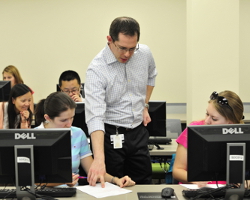 Edwards also swears by organized, team-based editing: Everyone in a room with the grant up on a projector, editing sentence by sentence. As well, he advises, “A lot of the time what makes the difference between a successful R and a not so successful R isn’t necessarily the quality of the ideas, but the evidence you can provide that supports why you’re doing what you’re doing, demonstrating some productivity in the area, showing that you have the experience with the resources that you plan to use. All of those things dispel the common criticisms reviewers like to write about incoming applications.”
Finding signals in the noise requires a lot of hard work, but as Dr. Edwards has found, the work can be its own reward.
 As the most common chronic diseases of childhood, asthma and other allergic diseases represent a “substantial burden on children in terms of quality of life, missed school days, and impact on the family in terms of financial costs as well as having to miss work,” according to Kecia Carroll, MD, MPH. As a pediatrician who regularly sees the tremendous effect of these diseases in her patients, she wants to understand what factors influence their development, perhaps eventually learning how to prevent it. Her current R01-supported project takes a close look at exposures during pregnancy, specifically dietary factors such as folate intake, and maps their effect on whether children in two different cohorts develop asthma.
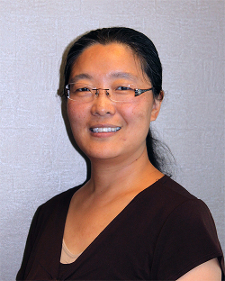 Pingsheng Wu, PhD, likes playing with numbers. She combs through large amounts of data, such as hospital records and surveys, seeking the causes of disease. Although she has worked with data related to several diseases, her current research centers on asthma. No primary prevention strategy exists for asthma, so in determining the causes of this disease, she hopes to find ways to preclude its development.
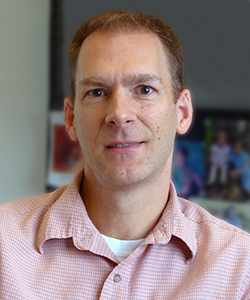 The field, he says, “put it all together” for him: A PhD in developmental biology and a residency in child neurology allowed him to combine his interests into an area that offers plenty of opportunity to solve basic science problems that have clear clinical relevance. In fact, finding these problems, especially in fields like his where relatively few physician-scientists do translational work, has been the centerpiece of his career.
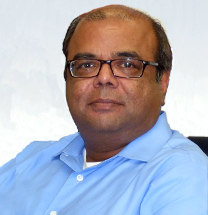 “The other thing I did for my grant, which I think is going to be very important going forward,” Hamid says, “is to not propose to do everything myself. My grant by design…was a collaborative effort. I identified other investigators at Vanderbilt who were experts in the techniques I was going to use, and in my grant I had them as co-investigators…even though my lab could do some of those techniques.” Though he is the PI of the project, he explains that having other investigators with effort in his grant demonstrated his ability to collaborate and seek out expertise, which “my reviewers indicated that they liked.”