“Modifying the Current Flow from Negative to Positive (Data!)”

Doing Research / Writing & Publishing

Scientists are experts at asking questions, analyzing, and critiquing. We are also taught that while there are rules and facts in biology, exceptions to rules exist – in fact, we expect them. I’m going to talk about critiquing to the point of publishing, about negative (but important!) data, and how science as a whole would benefit from learning from others’ troubleshooting.

One of the greatest accomplishments of modern science is that one does not have to “reinvent the wheel.” If you are trying to detect some biological phenomena, chances are there is a kit made by a company that claims to do exactly what you are trying to do for x amount of dollars. While many kits are truly spectacular and save us time, energy, and tears trying to reinvent the wheel, there are some that are not so spectacular. Or they are, but they don’t do precisely what you’d expect them to because BIOLOGY – there is always an exception to the rule.

Our lab got excited about a kit that uses fluorescent dyes to simultaneously detect hypoxia and reactive oxygen species in live cells. WICKED! I already love imaging and making neurons fluoresce pretty colors, so this would be an added bonus for my project to show that a particular protein is sensitive to hypoxic stress versus oxidative stress. Using the kit was simple. Add red hypoxia dye, add green ROS dye, and image immediately after stressing out my neuronal cultures.

The kit worked! Except…
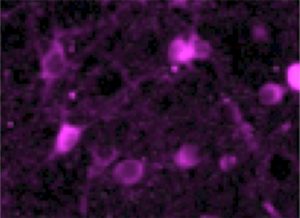
So these are unstressed neurons. See their happy dendrites extending everywhere? They’ve got great cell bodies too. Happy neurons are happy… except they’re all RED. The fluorescent dye is labeling my non-hypoxic cells as hypoxic, in addition to actual hypoxic cells (who are not as happy).
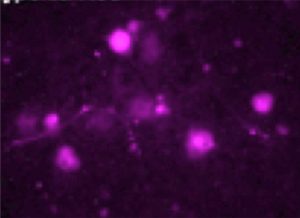
Why are non-hypoxic cells labeled as hypoxic? Without digressing far into chemistry, the red fluorophore is activated by a diverse class of enzymes that are abundant in every cell – nitroreductases. Some of these enzymes are dependent on oxygen levels to function, while some are oxygen-independent. The red dye is supposed to only fluoresce when in contact with oxygen-dependent nitroreductases – in which we infer detection of hypoxia. However, it is not always wise to make conclusions based on inferences. In this case, what the dye is actually and only measuring is nitroreductase enzyme activity, which are known to be affected by both endogenous and exogenous factors (i.e. not just oxygen!).

After struggling with different parameters to make this kit work for us, we decided to publish negative data (*GASP!*) comparing this kit’s detection of hypoxia to the current standards of measuring hypoxia. Gathering this data only took about six months of work, but about two years to publish because many journals – even methods journals – remain hesitant to publish negative data or data based on non-novel concepts. Eventually, we were able to publish this work, but it took much longer than expected. In that timeframe many other labs could have purchased the same kit and obtained false-positive results.

Publishing negative data and data that fail to replicate previous findings are as important as novel data in that they save you time and keep you from going down rabbit-holes. It’s so important that PLOS ONE recently launched “The Missing Pieces” collection that publishes such valuable negative findings. BioMed Central also provides such a platform in Journal of Negative Results in BioMedicine, stating that “publishing well documented failures may reveal fundamental flaws and obstacles in commonly used methods, drugs or reagents such as antibodies or cell lines, ultimately leading to improvements in experimental designs and clinical decisions.”

Another bonus of publishing this paper is that we got to publish a pun. As you can tell from this blog title, I LOVE puns.

Hehe, get it? The current dogma, as in electrical currents? Going from negative to pos- okay I’ll stop.
Don’t Miss the Deal Breakers: Nine Questions for New Lab Staff Hires

Doing Research

Hooray! You’ve set up a lab. You have a scale and everything. Now the applicants are pounding down your door looking forward to helping you get the Nobel Prize. Before you hire the most enthusiastic person with the best grades, be sure you include some questions that could be deal breakers even for the candidates you think are fabulous.

1.     Tell me about your undergrad research project. This is a great open-ended question that helps you quickly determine their level of comfort with what they were doing and how deep they dug into understanding their prior work.

2.     What are your goals for the next five years? That great candidate you found may look great to medical or graduate schools as well. And there’s a solid population of folks who are eager to parlay a few years of lab experience into a foothold for post-graduate education. Many labs make this work extremely well, but others need a longer-term hire. Make sure you have someone who can stay on the same timeline as you.

3.     Tell me about your level of comfort with (human specimens, animals, working with radiation and/or toxins, collecting phone survey data etc.) anything that you may take for granted but is critical for the job. There are great resources for teaching folks the ins and outs of personal protection, data organization and other skills, but you’ll have a whole other problem if they are horrified at the very thought of working with people/mice/specimens.

4.     Which of these skills on your resume are you ready to do immediately with little supervision? If its hard to believe your luck in finding someone capable of performing GC/MS, laser scanning microscopy and electrophysiology in ontogenetically labeled cells, that may be because they have a different idea of “skills” listed on their resume than you do. Make sure they can do the techniques listed rather than just having seen them done. A few methodological questions go a long way to identifying pros from enthusiasts.

5.     Can you travel? While it may be obvious that attending national meetings and presenting your lab’s results is a key feature of the job, don’t forget to ask.

6.     Who can I ask about what it’s like to have you as a supervisor? Being savvy, you surely got letters of recommendation from your candidates bosses, but what is it like to work for this person? The kind of boss they are to undergrads and rotation students in your lab will greatly impact your ability recruit the best labbies and keep them happy.

7.     Why should we hire you? Do they think they are technically amazing, a phenomenal organizer or just can get things done well? Give them a chance to tell you any information that they believe that you need to know.

8.     What do you think would be your greatest attribute in working in a (high paced/detail oriented/large/small….pick your descriptor) lab?

Protip: Send them a copy of your latest article and your lab rules before they get there and ask them if they have any questions about your work or work environment.


Now give yourself a pat on the back and publish some cool stuff with your swell new hire.

Did we miss anything? Leave us a comment!!

Play and Learn! CCTS Launches Kaizen-based Game to Teach Scientific Reproducibility

To help young investigators meet an impending NIH policy requiring formal training in scientific rigor and reproducibility, CCTS has launched a new web-based quiz game. Based on the Kaizen (Japanese for “continuous improvement”) platform developed by CCTS Informatics, this strategy has been successfully used to provide continuing education to medical, nursing, and dental students. The game offers a fun alternative for those who must master new competencies.

CCTS created the R2T (rigor, reproducibility, and transparency) game with institutional T and K trainees as well as individual K and F awardees in mind, but “everyone is eligible and encouraged to participate,” said CCTS Research Commons Executive Administrator Dr. Jennifer Croker.

Interested? Email Brian Wallace (jetytrip@uab.edu) with your first and last name, institution, and email address.

The Recruitment Tool You Didn’t Know You Have

Doing Research

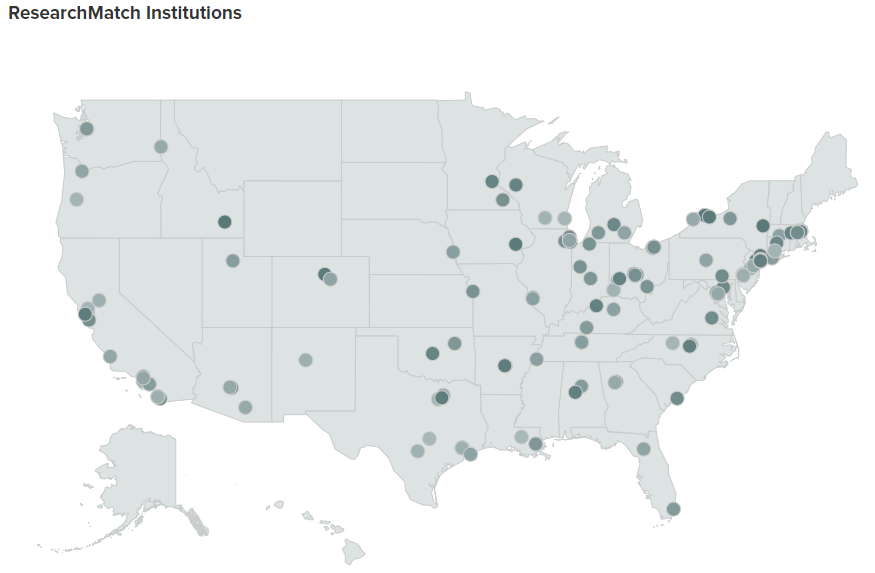
If you are based at one of these 165 US institutions and you’re looking to recruit volunteers for your research study, you need to check out ResearchMatch.org!  ResearchMatch offers a completely free way to find potential research participants from a growing pool that now includes over 140,000 individuals willing to be in research studies.

ResearchMatch has a simple goal – to bring together: (1) people who are willing to participate in research and (2) researchers who are looking for participants. It is a free and secure registry developed by major academic institutions across the country to help facilitate the completion of clinical trials and make a real difference for everyone’s health in the future.

The process is simple: Check if your institution is a participant, register with ResearchMatch, have proof of your IRB approval (both for your study and to use ResearchMatch as a recruitment tool), and describe whom you want to invite to participate in your research. Your request will be reviewed by your institutional liaison. If approved, you will enter your study’s criteria in the ResearchMatch Search Builder, which will yield a de-identified list of volunteers who match your criteria. Then you send out IRB-approved contact message to these potential matches through ResearchMatch. The secure ResearchMatch clearinghouse will route your message to each of these potential matches and they will have the option of replying “yes,” “no,” or no response. You may contact those who agree to be contacted.

Voila! Participants for protocols that range from intervention trials to survey research.

Map of Sites

ResearhMatch Main Page

Researcher FAQ
