Industry Funding Spotlight: Douglas Johnson, MD

Grants & Funding / Networking & Collaboration

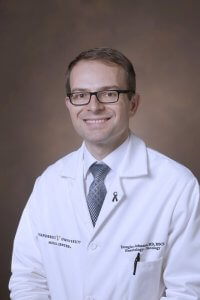
Dr. Doug Johnson is the Associate Director for Translational Research at the Vanderbilt-Ingram Cancer Center (VICC) and Professor of Medicine in the Division of Hematology/Oncology. He has a strong track record in partnering with industry to conduct research projects and clinical trials. He shared some helpful insights for early career researchers seeking to partner with industry.
 

What advice do you give to your mentees seeking industry funding?

DJ: One key piece of advice my mentor, Jeffrey Sosman, M.D., passed on to me was that if you build it, they will come. My mentor and Mark Kelley, M.D. started a melanoma biobank and I helped build it up further and developed a well-annotated clinical specimen and data bank. We’ve built something really attractive to collaborators across both academia and industry, because, in many cases, access to biospecimens and clinical data is one of the rate-limiting steps.
Willingness to engage with industry is another key to building successful partnerships. Researchers don’t have to be indiscriminate and talk to everyone, but they should welcome conversations to learn how much and what type of support companies have to offer them. Increasing experience with meeting people and engaging in dialogue can help researchers work through processes and details quicker to determine if a partnership will work.

Consider win-win opportunities. The opportunity should be useful for all constituents (patients being the number one focus, but also the donor and the researcher). Undoubtedly, the potential industry partner will assess the benefits to their business. Scientists should move forward with eyes wide open, knowing they have a valuable resource, and any potential partnership needs to be mutually beneficial, useful for patients and for their own career.

Understanding inputs and outputs should be part of the process. For example, looking at input/output— will the researcher exhaust their repository to get one low-impact paper? Or, on the other hand, will they get to use cool, cutting-edge technology that will give them incredible data that leads to publications and grants, and is useful in other ways? Those are two different scenarios. I encourage my mentees to think about their discussions with potential partners to determine if it’s reasonable and makes sense for them to continue the conversation.

It’s important for researchers to consider exactly what they will get from the collaboration, because there are some industry collaborators who will extract as much as the scientist is willing to give them. Not in a nefarious way. The company might be focused on its own interests. Researchers should protect their own interests by fully leveraging their resources and making sure the relationship aligns with their research goals.

Beforehand, learn how the process works. If the scientist provides samples, will the company give the data back so the scientist can look at the results? Or will the company analyze the data themselves? Will the collaboration lead to a joint publication? Clarifying things like cost and who will pay for what are also important factors. Sort out specifics early in the process to assess fit and avoid unfortunate discoveries six months into the contracting process. Thankfully, here at Vanderbilt, we have a great contracts management office, VUMC Office of Sponsored Programs-Contracts Management, and the Center for Technology Transfer and Commercialization to help guide and manage such processes.

Failing to build a partnership isn’t a bad thing. Potential partnerships might fail for various reasons—misaligned legal requirements, unbalanced or incongruent objectives among constituents, and even differences in methods (analytically or how biospecimens/samples are handled). The goal is to ‘fail fast’ to avoid devoting too much time and effort to an untenable partnership.

Not all partnerships with industry result in large funding opportunities, but they might still be worth pursuing. If a company is interested in a particular biomarker or has a new sequencing assay or some kind of AI signature that they’re interested in, a scientist with samples or clinical data might benefit from collaborating with that company. Typically, those opportunities are more useful for getting papers published and building name recognition than they are for providing significant career funding. The company might cover the cost to do the assays and not offer anything more substantial. That should not be a deterrent to collaborating with them. Joint, high-impact papers might be the only immediate reward, but the work could later result in funding from the same company or from a referral. In the cancer world, a common mechanism is to function as a sub-investigator within an industry-sponsored clinical trial. These types of opportunities exist across other disciplines and with translational research too.


Where can scientists meet potential industry partners or find investors?

DJ: Mentors can function as conduits to new relationships through their network. My mentor introduced me to different people and facilitated my authorship of papers. I met a number of people that way, including a scientist working on immunotherapy, which led to a clinical trial examining the effects of the PD-1 inhibitor.

Being able to leverage a mentor’s connections can be instrumental in launching the careers of researchers who are just getting started. I was fortunate to have a mentor who allowed me to do that, so now I do the same for my mentees. It becomes a virtuous cycle when you experience success using this strategy. Other scientists witness your methods and not only try to emulate the pattern, but seek to collaborate with you.

National and local professional meetings can serve as a gateway. Speaking for oncology, the American Society of Clinical Oncology meetings are well attended by industry, which provides many opportunities for professionals in the oncology field to build relationships with industry contacts. Medical science liaisons or other people who are influential within the research division of a company are also good sources. Willingness to interact with those individuals, remaining open to hearing what they have to say, can produce unexpected rewards. Be patient. I would say the success rate for landing a partnership (relative to the number of initial conversations I’ve had) is probably around 10 or 20 percent.

Occasional opportunities for industry grants are possible, though more an exception than the rule. Most of my dealings with industry have been an in-kind collaboration where we provided the samples, they provided the sequencing, and then they gave the data back to us and we could do whatever we wanted to with the data.

Patient philanthropy can sometimes be a surprising source. I would encourage scientists to talk about their research with patients. Most patients don’t have an appetite for hearing about your research but describing your work in a clear and passionate way to the few that do want to listen potentially allows them to catch the vision and could get them excited about funding your project.

Cultivate connections with leadership and clinical partners. This is especially important for scientists who don’t work in a clinical setting (PhDs). Leadership has ties to philanthropic sources and may think about a particular scientist more readily when an opportunity surfaces, especially if the scientist is excited about their research and is highly productive. If it makes sense for a PhD scientist to collaborate with a clinician who might be less interested in research or who doesn’t have a big research program, they can leverage their expertise to gain traction for the project with key constituents. The goal as a researcher should be to cast a wider net which can provide a bridge that connects them to people in not only in academia, but also those in industry and at other philanthropic organizations.


Douglas Johnson, MD, is an oncology researcher exploring ways to profile cancers to predict which patients will benefit from immune therapies and has published numerous papers in this area. He is also focused on understanding the effectiveness and toxicities of immune therapies in high-risk patients, including those with autoimmune disorders, advanced age, or organ dysfunction. Dr. Johnson is the lead investigator on numerous clinical trials at Vanderbilt.


Drug Development: What to Expect When Pursuing a Partnership with Industry

Doing Research / Networking & Collaboration

David Merryman and his research group’s work in targeted drug strategies has led to multiple forays into industry collaboration and company development.

He admits that the path to drug development has been more nuanced than expected as he continues to work towards his ultimate goal of advancing a new drug into the clinical setting.

Reflecting on his experiences, he candidly shared his observations on navigating industry partnerships and starting a biotechnology (biotech) company.


How did your partnership with one of the largest pharmaceutical companies in the world materialize?

Merryman: I have two collaborators, both named Craig. Craig Lindsley is a medicinal chemist and pharmacologist. He runs the Warren Center for Neuroscience Drug Discovery. His group focuses on drug design. Craig Duvall works in biomedical engineering. He develops carrier-free RNA drugs. My lab identifies the mechanism and the need. They work to design the new drug or new delivery method. In collaborating with their labs, we’ve filed patents around new chemistry to deliver drugs.

Craig Duvall and I formed an industry partnership with Bayer in Germany to develop a drug for kidney disease as part of their kidney disease drug development program. The partnership dissolved prematurely when Bayer shifted away from that program towards developing biomarkers and clinical studies as the company faced increased litigation surrounding its acquisition of the Monsanto corporation, the manufacturer of the weed killer Round-Up. After a year, Bayer returned the patent it had licensed from Vanderbilt and ended the partnership.

After that, Craig Lindsley and I collaborated in making a new drug. Following a few failed attempts at partnering with various companies, we launched SERO Pharmaceuticals, a clinical-stage biotechnology company, which is about a year old. We’re trying to raise money to do IND (Investigational New Drug)-enabling studies and get to a clinical trial. For a couple of years, Craig and I were primarily looking to partner with a drug company. We didn’t want to start a company, but we ended up starting one anyway. One benefit is that we have agency over what we choose to focus on.


Would you share some takeaways based on your experiences?

Merryman: In academic medicine, discovery of new applications for existing drugs, or gaining a deeper understanding of disease progression, is important, but what’s more valuable to investors is having patentable materials, novel chemistry, or novel compounds that are patented.

Projects that are further along in development are more attractive to investors, as are ones that demonstrate knowledge of the toxicology features of a drug (whether the drug can make people sick). Surprisingly, in previous pitches, even with strong preclinical data based on animal models demonstrating a drug worked on the disease, a lot of the big companies told us to come back after we had human data. Once you get past a phase 1 clinical trial, lots of companies become interested, but it might cost around $10 million to do the trial. That’s a heavy lift.

Investors are also interested in the development of biomarkers. In a lot of drug development processes, investors either want a specific drug mutation that they can hone in on and they know exactly how it works, or they want biomarkers in the phase 1 trial that will give them confidence that a very expensive phase 2 trial will most likely work.

We had to be overly prepared for a fair amount of scrutiny from potential investors. There were lots of questions. Sometimes we were questioned about our knowledge of other projects that only the senior members of the companies we were pitching to had knowledge of. Companies could be vetting multiple projects simultaneously or evaluating their competition. The information we provided seemed disproportionate to how much feedback we received after being rejected. To move past the disappointments, it’s always been important for me to stay focused on my desire to develop drug therapies that can improve the lives of patients.

Preparing for the long game is helpful. You’ll kiss a lot of frogs. However, it’s also important to keep in mind that patents have a 17-year lifespan. You need to accelerate through the development process to get to your Investigational New Drug (IND) studies. And you have to factor in a minimum of two years for clinical trials, if they go splendidly fast. Companies that invest heavily in new drugs want at least ten years of protected patents where only they can sell those drugs.

Final thoughts?

Merryman: I’ve seen drugs succeed commercially that weren’t the best drug, but the scientist was savvy in lining up multiple investors. Networking and building relationships with potential investors and people in industry are important.


David Merryman, PhD, is the Walters Family Professor and Associate Chair for the Department of Biomedical Engineering. His research examines the role of mechanical forces in altering cardiovascular, pulmonary, and renal cell function at the gene, phenotype, and protein levels, with particular focus on the serotonin 2B receptor and cadherin-11.

Mentoring: Defining Your Mentoring Style. Part 1

Mentoring

Congratulations on starting your new lab! In addition to the countless logistical, scientific, and administrative duties on your plate, this is the moment to define your lab environment. Let’s talk about some ways that you can define a mentoring style that both encompasses your own unique strengths and fosters success in your mentees.

How hands-on should you be?

You are likely coming to this PI (Principal Investigator) role straight from a postdoctoral fellowship, clinical fellowship, or similar traineeship where you were the one carrying out the research on a day-to-day basis. Perhaps you truly enjoyed data collection and analysis, all the many hands-on duties, and also your first experiences mentoring junior trainees (undergraduates, medical students, or residents).

How hands-on should you be now that you are in the PI role?

Now you are in a leadership role, where you have to delegate some of your research duties. There are two opposing tendencies I’ve noticed with new PIs getting started. One tendency is over-involvement because they get excited not only about the scientific end-results, but also the hands-on processes of executing research projects. The other is under-involvement, which may happen inadvertently when the PI is stretched too thin.

The Over-involvement tendency often stems from fear of delegating or relinquishing control. The PI may think that execution will be faster, and better, if they do it themselves. In many cases at the beginning that may objectively be the case, so it’s hard to step back and let mentees and staff take the lead. Mistakes may be made, and this can be scary! Yet, problem-solving especially when your team members feel ownership of the process, is a crucial component of self-efficacy. Part of your job as a mentor is to foster self-efficacy by creating an environment where it is safe to fail, and then – crucially- try again.

Importantly, team members who are really deep in the hands-on work may generate solutions and innovations that you would have never thought of. And the PI that can’t hand over the reins will potentially miss out on the benefits of having a mentee bring their unique self to the process.

On the other hand, the Under-involvement tendency can happen when a PI gets spread too thin with other duties (teaching, admin, clinical, and even grant-writing) and expects the new team members to be quickly up to speed… Perhaps assuming the team will be as proficient as the PI was during their own scientific training. But any new team–even if a very lucky PI’s team consists of experienced staff and trainees with great intuition–still needs a lot of guidance at the beginning. The epiphany for me was attending a career development workshop at Vanderbilt where the speaker clearly told us, “At the beginning, do not expect your trainees to be you. They are not you.” He went on to explain that they may not be able to be as autonomous as you were in your previous phase of training, and also that your new trainees may have different destinies in research (not all are destined for the PI path, and that’s okay–they are not you!).

I was expecting my students to be more independent than they were ready to be. We can forget how much learning each of us did along the way! Individual learning, project learning, methods learning, and team-work learning. I’ll talk more about this in Part II: Developmental Trajectories.

Stepping back, there is a lot of fine-tuning necessary in your new PI role in terms of how much guidance and hand-holding to do. Trust your gut and relish the joy of creating an environment where each team member, including you, plays a unique role. There will be some decisions only you can make. And your team members might need more direction or specific details from you if you want the work to be done in a rigorous manner.

One of the most productive mindsets you can adopt as a mentor is to recognize your own strengths and weaknesses, determine how to effectively delegate responsibilities, and jump in when mentees get really stuck. When in doubt, I suggest erring on the side of being actively engaged in oversight and doing regular check-ins, but check yourself if you find you are doing the heavy lifting on too many detailed research tasks yourself. Ultimately, as the PI, you have the opportunity to create your own vision for your program of scientific research and your own brand of mentee success.

Reyna L. Gordon, PhD, is an Associate Professor in the Department of Otolaryngology – Head & Neck Surgery at Vanderbilt University Medical Center, where she co-directs the Vanderbilt Music Cognition Lab. She also has faculty appointments at the Vanderbilt Genetics Institute, the Vanderbilt Brain Institute, the Department of Psychology, the Vanderbilt Kennedy Center, and the Curb Center for Art, Enterprise, and Public Policy.


Reyna L. Gordon, PhD, in collaboration with Verna Wright

Why Partnering with Your Foundation Relations Team is Worth It

Grants & Funding

As federal funding priorities shift, researchers may need to pivot to maintain career momentum. Foundation grants can be a key resource, but navigating the process can be tricky. The Foundation Relations team at VUMC—Sue Reeves, Executive Director of Foundation Relations, and her teammates, Adele White, Senior Director, and Bethany Copeland, Program Manager, who are led by Zeena Abdulahad, Executive Vice President and Chief Development Officer—are here to help faculty navigate unfamiliar territory.
Before you contact a foundation directly or respond to one of their Requests for Applications, check in with the Foundation Relations team to improve your chances for success. Here are some reasons why.

1. The ‘foundation,’ pun intended, has already been established.

The team has spent countless hours building relationships and gathering data. Existing relationships with foundations, members of scientific advisory committees and boards of trustees have been carefully cultivated over the years. They’ve also fostered strong relationships with faculty leadership who can help identify researchers within the VUMC enterprise who are suitable for specific opportunities. They have access to a database containing information on thousands of foundations that include insights not easily found elsewhere.

Q: How much time does your team spend gathering foundation information?

Sue Reeves (SR): A lot. We hold short meetings to understand researchers’ work to become more efficient in connecting them with foundation funders. Bethany does most of our prospecting and does deep dives into funding opportunities tailored to specific research areas to help match them with faculty research interests.

Q: Can faculty access the foundation database themselves?

SR: Yes, but it’s best for Bethany to assist. She’s more familiar with the system and can quickly locate relevant information.

2. The team excels at building bridges— “connecting faculty and foundations” is their motto.

If anyone has the right to name-drop, it’s the Foundation Relations team because of all the people they meet and know. Consider yourself a fortunate ‘plus one’ if you decide to partner with them. It’s like getting a concert ticket upgraded to an all-access pass when they leverage their extensive network to help open doors for you.

Q: How do you connect faculty to opportunities?

SR: Sometimes faculty contact us directly after identifying grants they’re interested in. Other times, department chairs or division heads will invite our team to a department meeting to give a 15-minute overview of what we do. We also collaborate with individual gift officers who serve as liaisons to departments. They involve our team when faculty are interested in exploring foundation opportunities. Adele and I have worked in the foundation relations space for many years and have developed relationships with most of the major funders in health, science, and medicine. We work with institutional and departmental leadership at VUMC to leverage these relationships for the benefit of faculty.

Q: What’s the process for partnering with you?

SR: It starts with our team’s intake survey, in which faculty outline their research scope and funding needs, target population, and familiarity with foundation funding. After we review the surveys, we reach out via email or meet one-on-one with faculty to discuss specific funding opportunities that Bethany compiles. If there’s an opportunity that aligns well with their research, we guide them through the application process and help them submit a competitive proposal.

If there’s not an obvious match at first, Bethany continues her research. Bethany is a wiz at finding great opportunities that others may not be aware of. For example, she recently found an international grant focused on microbiota and women’s health research that perfectly matched a faculty member’s project scope, which led to a submitted proposal. When the researcher saw the opportunity, she exclaimed, “Thank you, this is a perfect fit!”

Q: What advice would you give to faculty on how to build and maintain long-term relationships with foundations?

SR: There is the building part, and the sustaining part of developing a successful relationship. The stewardship part sits in our court as the relationship builders, but recipients of foundation grants shoulder the responsibility of being good stewards of the money they receive to support their research. This includes submitting timely reports. Then they’re more likely to get additional funding from that foundation in the future.

3. Working with the Foundation Relations team saves faculty time.

Searching for grants and preparing applications is time-consuming and a distraction from doing actual research. The Foundation Relations team can help facilitate the grant seeking process for faculty to make it more efficient and effective.

Q: How do you assist with specific grant opportunities?

SR: Once we confirm alignment between the research and the grant opportunity, we often share information about past successful grantees or leverage our relationships with foundation contacts to gain better insights into funding opportunities. We also make sure researchers work closely with their grants managers and the Office of Sponsored Programs (OSP) to ensure their proposals are vetted and recorded in our institutional grants system appropriately.

Q. Do you work with postdocs too, or just faculty?

SR. We mostly work with faculty but occasionally work with postdocs on foundation opportunities. It’s a little harder for us to identify postdocs to match with foundation opportunities.

4. Networking in Action

The team’s efforts often lead to significant opportunities.

Q. Can you share examples of how Foundation Relations partners with faculty

SR. I recently worked with a VUMC leader to develop a relationship with a foundation that funds medical research. The foundation doesn’t accept unsolicited proposals. They’ve been on my radar for several years. In doing some research, I found a connection between one of our VUMC leaders and a senior leader at the foundation—a relationship that dates back to their medical training days. Identifying that connection set in motion a series of meetings, project pitches, and a visit to our campus, that subsequently led to multiple proposal invitations for very large research awards.

Sometimes we get connected to foundations through grateful patients. A good example of that is the Gladiator Project (GP), co-founded by the late Eric South and his wife (now GP President), Leslie South. I was looped in because the couple was interested in supporting Dr. Ryan Merrell’s vision of expanding brain cancer clinical trials and eventually establishing a comprehensive brain tumor center at VUMC. The Gladiator Project provided a gift of $500,000 to establish the Gladiator Project Brain Tumor Research Fund at VUMC. I stay in touch with Leslie and other Gladiator Project board members to report on our progress and help support their annual fundraising events.

If you are a VUMC faculty researcher interested in learning more about foundation funding, or getting ready to submit a foundation grant application, contact Sue Reeves and her team for support at foundationrelations@vumc.org. They’re ready to help you optimize your chances for obtaining the foundation funding you need to support your research.

Making the Rounds In Palliative Care, One Collaboration at a Time

Doing Research / Networking & Collaboration

Making the Rounds in Palliative Care, One Collaboration at a Time


Before it became the norm for trauma units and palliative care physicians to work together, at Vanderbilt University Medical Center (VUMC), Dr. Mohana Karlekar and her colleague, Dr. John Morris, the pioneering head of  VUMC’s trauma unit at the time, struck gold when they teamed up in 2007 to discuss how they could collaborate to improve patient care delivery.

One meeting set the tone for a partnership between their departments that has since become a seamless integration of trauma care and palliative care services that has helped shift the treatment protocol paradigm in their respective fields. In this Q & A, Dr. Karlekar shared her thoughts on this, and other collaborations that took shape during informal conversations or meetings and eventually led to initiatives that continue to expand the boundaries of interdisciplinary healthcare.

“…you should just walk around the unit and round with me!”

How did the collaboration between your palliative care department and the trauma unit come about?

When I first came to Vanderbilt University Medical Center, I was asked to meet with providers in any department who either had an interest in or needed palliative care services. When I finally caught up with John Morris, he said, “We need to start using palliative care in trauma.” This was in 2007. John thought that trauma patients could benefit from palliative care because by definition these patients all had serious illnesses. Some had been chronically ill with a complication like a fall. Others were once well but had experienced blunt trauma (i.e. from an MVC, Motor Vehicle Collision). He recognized that surgeons were not traditionally trained to communicate and having a team of clinicians who could help communicate difficult information around diagnosis and prognosis would help to deliver more goal concordant care.

In our first meeting, John began talking about all the ways we (palliative care providers) could be helpful in the trauma area. One day I was in the trauma unit for a consult with him and he said, “In fact, you should just walk around the unit and round with me!” They had at least thirty to thirty-five patients in the trauma bay, ICU and step-down unit at the time.

We went through in real time discussing what types of consults would be helpful or not helpful. It was very collaborative as we went back and forth, “In this case, I think yes, but not that one,” John would say. We decided that the patients who were appropriate for palliative care included ones that created ethical dilemmas (wide awake tetraplegic patients), had a poor prognosis (older adults with falls with a serious injury like traumatic brain injury), one with serious comorbidities who happened to come into trauma (patients with cirrhosis who had an MVC, or patients with traumatic injury with advanced heart failure. There was give and take on who might be involved from both our perspectives so it wouldn’t be stressful on either unit.

What began as, “Let’s get some consults through this robust relationship,” turned into a partnership where we now see a decent number of trauma patients. These days our palliative care trauma consults involve young people with bad brain injuries or older adults who fall, in addition to patients with terminal illnesses. Older adults have a higher incidence of bad traumatic events linked to falls, and it’s really awful to see.

That one conversation years ago led not only to patient care collaboration, but also papers published together and a quality improvement (QI) project focused on the frail and elderly. The project, Creating New Opportunities to Educate Families on the Impact of Frailty and Cognitive Impairment in a Trauma Intensive Care Unit: Results of a Quality Improvement Project, involved teaching nurses to screen for frailty and then consult palliative care for patients with frailty who were admitted to step-down, to discuss goals of care (more long term). I co-authored a book chapter with one of the surgical trauma doctors during COVID. We do yearly lectures for critical care fellows. The trauma team is involved in family meetings and trauma providers partner in palliative care service rotations. Since we started working together, we have always had someone from trauma in family meetings. Now, we work and communicate so well together that if someone from the trauma team can come, great, but they don’t always have to be there.


“We’re going to come up with a project together and this will be our baby.”

Can you talk about other collaborations you’ve been a part of?

Another one that started out as one thing and lead to something else was when I was asked to be a part of a group led by Dr. Gordon Bernard who had been tasked with doing palliative care research. We published COMPASS: A Pilot Trial of an Early Palliative Care Intervention for Patients With End-Stage Liver Disease. One of the group members, Cheryl Gatto, PhD, and I had a couple conversations and found that we were sort of kindred spirits. At the time, we didn’t know each other that well. We started talking one day about something that had happened within the project, and we both agreed that we needed to try to address the issue. From working together on that issue, Cheryl said to me, “Next time, we’re going to come up with a project together and it will be our baby.” I thought, Okay. I don’t know who you are, but you seem like a good person, so I’ll go along with it.

It took about five years, partly because of COVID and other stops and starts. She and I ran this pragmatic trial looking at this surprise question: Would you be surprised if this person died within a year? If the answer was “No, you wouldn’t be surprised by the high likelihood of death,” then you were prompted to do a palliative consultation. That was a trigger through what we used to call BPAs (Best Practice Advisory). Now they’re called CDMs (chronic disease management). The paper, Evaluating Performance of the Surprise Question to Predict 12-Month Mortality in Patients With End-Stage Liver Disease, was published in the American Journal of Hospice and Palliative Medicine. We now have approval to incorporate this CDM into eStar to be used in real time for inpatient clinical practice.

As we began collaborating–I know what my skills are and what my skills aren’t–though I can publish, I’m not a good statistician. So, I mentioned to Cheryl that we do a fellowship research project every year. I asked if she would be interested. She joined the project and for the last two years has been the research point person for which she really has no reason to do. She has a busy job running pragmatic trials with a colleague. She is very passionate about palliative care from personal experience and has been such a wonderful source of information. She picked my brain about certificate courses and ended up completing a certificate course in palliative care, even though she didn’t have to. Now we’ve become really good friends and collaborate on a number of things.

Considering all that she does…Operations Director for the VUMC Center for Learning Healthcare, running clinical trials with the center’s Medical Director, Dr. Matthew SemlerI wondered why she would ask for my help to run a project. She told me, “All you have to do is be the content expert.” That’s the other part of it as well. I told her OKAY but you’ll have to teach me. She sent me all these articles on pragmatic trials. She sent PowerPoints. I read about pragmatic trials, and she read about palliative care. I’m sure she knows more about palliative care than I know about pragmatic trials, but we both learned from each other. Beyond the projects we have our friendship which is the best part.


“A nurse in Zambia needs someone for her PhD mentor group.”

Another sort of accidental collaboration happened because a colleague at the cancer center Dr. Rajiv Agarwal, an oncologist who is a part of our inpatient Palliative Care Consultation service mentioned that a nurse practitioner in Zambia needed someone for her PhD mentor group. I said laughing, “We need to find a way to go to Zambia!” Time passed and I hadn’t heard any more chatter about it. I asked Rajiv for an update. He told me if I was interested, I should reach out to the nurse to find out. Again, recognizing my research skills/limitations, I pulled Cheryl in, and we had a call together with Rajiv and the nurse.

Eventually the nurse sent me the information. They had an NIH SHEPIZ (Strengthening Health Professional Workforce Education Programs for Improved Quality Health care in Zambia) Grant. She said they needed people to come teach in Zambia. I have a friend who by weird coincidence spent a year in Zambia about 25 years ago. She and I went last year and taught for two weeks in Zambia.

We created a certificate program for them. We met local leaders in healthcare and palliative care in Lusaka, Zambia. A year later, we’re rolling out a virtual teaching seminar to keep that going. They joined us as guest faculty for a journal club we did back in January. We talked about opiates and what it’s like to practice pain management in a country where opiates are minimally available. The hope is that this will continue to be an ongoing partnership and that there will be a layering effect where we can touch and connect with more people.

I think when we think about partnerships, (this transcends palliative care and medicine), sometimes asking the question out of curiosity can lead to the unexpected, “What could you do…can you try doing…?” Not being afraid to ask is the key. It would not have happened if I hadn’t said out loud, “Gosh that seems cool!” Sometimes we don’t ask. That was my favorite one [collaboration] and for me, it was very transformative to go there.


“Maybe we should all get together and collaborate.”

Are there any other accidental collaborations you’d like to share?

One more, maybe not so accidental. When I worked in New York city I used to take care of Riker’s patients. The whole top floor of the Bellevue hospital is a Riker’s Prison, a locked unit. I incorrectly thought I knew how to take care of incarcerated patients because I knew the rules there (at Riker’s) and thought I was pretty comfortable with caring for those patients. Fast forward. Two years ago, this patient was handed over to me from one of my partners, who I consider to be very much on top of things and wouldn’t take something at face value if it didn’t make any sense. She told me we have this patient coming in from one of the prisons, but he doesn’t have capacity, so the warden is his decision-maker. It was one of those busy days, so I listened and wrote down everything. I was by myself in the unit that day with a young fellow.

That evening as I was talking to a fellow to give them a hand off, I told her the healthcare decision-maker for the patient is the warden. I stopped in my tracks and said, “That doesn’t make any sense.” The fellow agreed. On my way home I said, “Let me make a call.” I contacted the ethicist. They agreed that the warden should not be the decision-maker. Eventually we tracked down the patient’s wife and I called her. She was surprised and grateful that I’d called her. I was annoyed with myself for taking something at face value at first, but then eventually I got it right. Then I thought this is probably what we all do.

We had one meeting with a group of people to try to figure out the right way to handle this type of situation. I was still upset. My office mate colleague next door does a lot of work with medical students. I explained the situation and gave her information she could disseminate, because the frequency in which we care for these patients is often enough that we know the scenario but not often enough that we’re skilled in what to do. She replied, “We should do an M & M (morbidity and mortality) training about this. Three to four months later we did an M & M for the medical residents to learn about this. We ended up using this topic for the research project for the fellows. That paper has been published in the Journal of Palliative Medicine.

There was a Grand Rounds that my colleague, Dr. Wes Ely did with several people from outside the institution on incarcerated patients, de-shackling. I emailed him and told him that our fellows had sent a poster which got accepted at our academy meeting and that we’re in the process of writing a paper. “Maybe we should all get together and collaborate I said.”

Now we’re working on a collaborative effort to improve the care of patients who are incarcerated. We’re starting with a needs assessment and survey to figure out where people are, then eventually we hope to be able to make some substantive changes. We’ve reached out to nursing leadership who are onboard, ethics, and hospital police. Our division chief, Dr. Tom Elasy, offered to help us create the survey. It started as this annoyance, and I found that other people were annoyed by that same issue, and it’s something people really feel passionate about. It became this small thing that’s catching steam–another example of how collaborations happen unexpectedly.


Dr. Mohana Karlekar is an associate professor of Medicine and Section Chief of Palliative Care at Vanderbilt University Medical Center (VUMC). She helped co-found the Vanderbilt Hospice and Palliative Care Fellowship.

Her areas of interest and expertise include primary palliative care education, the intersection of palliative care and trauma and more recently advancing palliative care in Africa and the care of hospitalized carceral patients. In 2018, she served on the Tennessee Palliative Care and Quality of Life Task Force and has served as chair of the Tennessee state palliative care council since 2019.