“Ultimately, the best way to learn is by doing…”
Clinical drug trials mark the intersection of research and medicine, where the translation of lab experiments leads to advances in treatments, new protocols, or new drug therapies designed to improve patient care. The complex and lengthy nature of clinical drug trials poses a challenge for trainees eager to learn more about how they work. Many are uncertain about how to gain operational exposure to such trials. Dr. Dana Cardin, MD, a pancreatic cancer clinician-scientist shares some of what she learned along the way. She gives actionable advice on how scholars interested in pursuing a role in clinical trials can gain experience.
How did you get into running clinical trials in oncology/pancreatic cancer?
Cardin. I knew I had some interest in medical research early on. Before I went to medical school, I worked in a basic science research lab at University of North Carolina at Chapel Hill, after completing my undergraduate degree there. When I saw basic science experiments using mouse models of cancer and other illnesses to translate findings into treatments in the clinic, it excited me to see how discoveries in the lab could impact patient care.
I became drawn to oncology in medical school and ended up matching in that discipline. As a hematology/oncology fellow, I worked with and was mentored by Dr. Jordan Berlin, who has extensive experience running pancreatic cancer and phase I trials. Seeing clinical research up close helped me recognize the fit between my interests, skill set, and oncology research. During my mentored fellowship I wrote my first clinical trial protocol, followed it through IRB approval, enrolling patients, completing the study, then publishing it. It took a long time, but working through that process helped me realize that was the type of research that felt right for me.
What makes it difficult for trainees to gain experience in clinical trial research during training?
Cardin. The clinical trial process, in most cases, is long. There is no ‘instant gratification.’ Conversely, training windows are typically short in duration. As trainees rotate through a department or division, it’s difficult to see a full trial lifecycle. From beginning to end, each part of setting up and running a clinical trial requires time. Some parts take longer than others. For example, protocol development can range from months to years. Even once a protocol is written and a sponsor wants to open it at an institution, getting it activated typically takes about 2 to 6 months, depending on complexity and issues like contracting, budgeting, pharmacy review, and IRB review to ensure patient protection and the inclusion of appropriate risk/consent language in the agreement.
For medical students, most medical education is focused on patient care rather than trial development and infrastructure. Most PhD programs also lack comprehensive focus on clinical trial development. Learning about clinical trials takes a bit of planning by those who are really interested in pursuing that type of career path.
What is an effective way for students to learn more about clinical trials?
Cardin. Students (MD and PhD) and postdocs should pursue opportunities to gain lab experience (basic science or working with a clinician involved in clinical trials) for an introduction and practical experience. They can email Principal Investigators (PIs) running interventional studies to explore the type of science questions being considered and see if there are opportunities for new trainees in the PI’s lab.
In clinic we see patients on trials, and we talk about what it means and how the protocol works. We make sure fellows have access to the systems where they can pull the protocol. We talk through it with them.
How can trainees get deeper into clinical trials?
Often, mentors serve as the gateway for helping trainees learn what’s involved in coordinating and running a clinical trial — how to enroll patients in a study, devise and implement protocol, collect and analyze data. For deeper involvement, trainees can help develop protocols with their mentors, review example protocols, and/or work with experienced medical writers. As an example, we had a fellow who took a faculty position at University of Colorado. She worked on developing a protocol. Usually, you start with an example protocol. Another way we provide an opportunity for training is by pairing trainees with the PhD scholar we have on our team who helps with medical writing and protocol development.
One point to mention about protocols in clinical drug trials is that many drug trials are pharmaceutical-sponsored, so protocols are often pre-written (sometimes with input from physicians who advise companies). In those cases, the clinical researcher’s role is to evaluate available trials and decide what’s needed in their clinic and where they can meaningfully enroll patients.
There are also cooperative groups (largely, academic centers working together) that develop trials to answer important questions industry may not fund. Through networking, trainees can look for opportunities to gain practical knowledge of how these groups work.
More formal opportunities for training include programs like a Master of Science in Clinical Investigation (MSCI), which I did. You learn protocol development, statistics, ethics and other skills in this type of program. There are intensive one-week workshops (e.g., AACR/ASCO-type programs) where trainees apply with an idea and mentor, and they work with experts to develop a protocol and statistics to make it workable. Ultimately, the best way to learn is by doing—writing a trial, seeing it through, enrolling patients, and learning from mistakes.
What other aspects of clinical trials are important for trainees to learn about?
Cardin. Interacting with companies is an important part of my job. Sometimes, the projects that are important to our team may not be of interest to them. Learning how to negotiate to get something you need from drug companies when interests are not fully aligned is a great skill to develop. Engendering goodwill with the research community and participating through NCI or other NIH mechanisms where companies provide a pool of drugs at no cost are a couple of examples of how pharmaceutical companies contribute to research that doesn’t have a huge financial upside for them. There is also the possibility that a particular study could generate useful hypotheses or data. In oncology, even for rare tumor types where there may not be a big financial return, it can be beneficial for a company to have supportive data. Projects with negative results or ones that don’t yield any type of advancements, still generate valuable information that guide next steps.
The collaborative process involves reciprocity—in negotiating, contracting, budgeting, and building strong working relationships. Pharmaceutical companies rely on academic centers to gain access to patients and clinical expertise, and academic centers need access to the drugs pharmaceutical companies can provide. Both sides (scientists and the pharmaceutical industry) recognize that ultimately, progress in cancer treatment comes from testing new therapies and seeing new drugs get approved.
Sometimes relationships don’t work out. There’s a lot of uncertainty in developing and running clinical drug trials. I’ve had two studies this year end abruptly because the sponsor decided not to continue supporting the research. I don’t love it, but it’s partly how clinical trials work. You learn to make sure you have enough eggs in your basket that if one falls through, you have backup plans. These are good lessons to learn while in training.
How does the VUMC network of clinical trials work?
We build a portfolio that allows maximal impact for patients. In the Gastrointestinal (GI) Oncology Department we have many trials running concurrently. Overall, the program has over forty active trials spanning multiple disease sites (colorectal, liver, biliary tract, pancreas, esophagus, etc.). Trials are highly specific—different studies apply to different stages (localized vs. metastatic), treatment lines (first-line, or initial, primary treatment) vs. later-line (secondary therapies used if necessary), and even molecular subtypes (e.g., trials limited to patients with specific mutations). Each clinical trial has its own unique patient population. We try to meet the needs of the types of patients we’re seeing.
Luckily, here at VUMC we have a large research infrastructure that supports our work. Various teams manage the legal and other contractual requirements such as budget negotiations, IRB submissions, consenting/screening, and many administrative tasks. This allows me to focus on figuring out what studies we need, talking to companies, responding when companies ask if we’re interested, and working as a GI team of seven doctors to review protocols. We decide which studies to pursue… Is the population too rare? Will it be hard to find patients? Is the question worth asking?
My goal is getting patients into studies and seeing them do well. Mostly, I do what I do because I like working with patients and taking care of them.
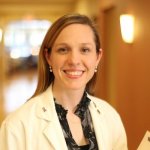
Dana Cardin, MD is an Associate Professor of Medicine (Hematology/Oncology) and Co-Chair of the Data and Safety Monitoring Committee (DSMC). As a Vanderbilt faculty member, she develops clinical trials in gastrointestinal cancers with a special emphasis on pancreas adenocarcinoma. She serves on the National Comprehensive Cancer Network Pancreas Adenocarcinoma Guidelines Panel and on the National Cancer Institute Pancreas Task Force.