Don’t let your lab’s fortunes sink like the Titanic, to borrow the opening simile from The Progress Principle. Read this book instead and find out how to facilitate daily progress among yourself, your coworkers, and your subordinates, leading to “virtuous loops” of small successes (that add up to big victories) and happier, more creative and productive people.
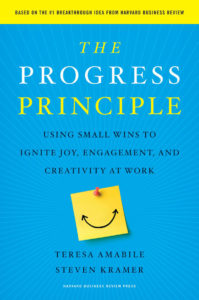 In this business classic, authors Teresa Amabile, Baker Foundation Professor at Harvard Business School, and Stephen Kramer, a developmental psychologist and author of several Harvard Business Review articles, build their system on the principle that “[b]ecause they spend so much of their lives working, people deserve the dignity of having positive lives at work.” Their findings, drawn from thousands of daily work diaries at companies of various sizes and industries, indicate that daily progress does more than anything else to influence “inner work life.” (Don’t scoff at the emphasis on feelings. The authors explain in footnoted detail exactly why, on a neurobiological level, emotions are vital to good decision-making.)
So how can you help your research assistants and administrators take incremental steps every day? Amabile and Kramer have several suggestions, ranging from simply ensuring they have the resources (computer, office supplies, student worker help) to do their work, to allowing them real autonomy in how they complete their tasks. Most importantly, clear as many barriers to progress as possible, because in their research, the authors discovered that setbacks have more than twice the influence than progress on inner work life. So if the centrifuge isn’t working? Get it fixed as soon as possible.
The authors describe two other types of actions that promote positive inner work lives: “catalysts” for progress such as clear goals, enough time to actually do the work, and allowing employees to voice ideas; and “nourishers,” or interpersonal support, like acknowledging and empathizing with a frustrating computer program or providing opportunities for coworkers to get acquainted. Leaders of small teams have an especially strong influence on team members’ inner work lives through these channels, which is detailed in an excellent chart on page 118.
With its clear guidance and illustrative examples drawn from fourteen years of research, this book excels at translating psychological insight into intriguing and transformational methods of management. Will your ship sink or sail?
The Progress Principle: Using Small Wins to Ignite Joy, Engagement, and Creativity at Work
Teresa Amabile and Stephen Kramer
Boston: Harvard Business School Publishing, 2011
More Resources
StrengthsFinder 2.0: Discover Your CliftonStrengths
How to Manage People as a New Investigator
Simple Steps to Validating and Managing Others: A Bedtime Story
 So you’re not a dancer. You’re not a musician. You’re not an artist or a poet. Why read this book? Because you have ideas: ideas for new population studies, new treatments for disease, and new ways to look at data. And this book will give you the habits that beget more good ideas and allow you to take advantage of them when they show up. For creativity, as choreographer and author Twyla Tharp stresses, is not an inborn characteristic nor merely the odd bolt of inspiration; it is a collection of patterns and practices that allow anyone to create—as long as they’re willing to put in the work.
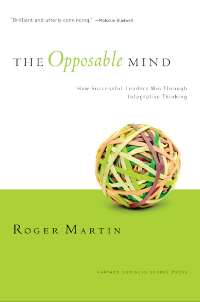 For fifteen years prior to this book’s publication, author Roger Martin studied successful leaders, interviewing more than fifty of them for up to eight hours at a time, trying to find a pattern to their success. The pattern he discovered was what he calls “integrative thinking.” Such thinkers have the predisposition and capacity to hold two diametrically opposing ideas in their heads. And then, without panicking or simply settling for one alternative or the other, they’re able to produce a synthesis that is superior to either opposing idea.
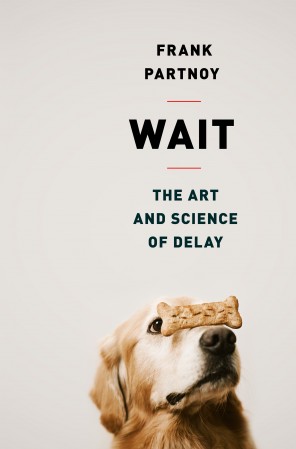 Did you know that speakers who frequently pause for short periods are more persuasive than those who don’t? Or that not lingering on a date that’s going well can make a new relationship stronger? What about the fact that taking some time before apologizing causes the wronged person to view the apology as more sincere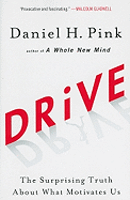
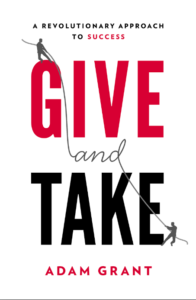 Adam Grant’s New York Times Best Seller Give and Take has been heralded by Daniel Pink as “A rare work that will shatter your assumptions about how the world works and keep your brain firing for weeks after you turned the last page.” As a brain scientist, I can pretty much guarantee that unless you’re dead, your brain will be firing with or without this awesome book, BUT Grant absolutely delivers for despondent scientists and physicians who are under increasing pressures to produce, turn away from mentoring others and focus on the bottom lines of getting grants and seeing more patients.
 Former Secretary of State Colin Powell offers leadership advice through storytelling in this collection of anecdotes and true tales. Each short chapter derives a lesson from an incident encountered in his military and political service, and occasionally from private life. Often chatty and rarely preachy, the text is as enjoyable as it is informative.
 Which do you think would help the germ of a thought grow into a brilliant idea: Talking about it with others, who have their own sparkling thoughts and brilliant ideas, and recombining the best parts of each to make them as strong as possible; or locking it away without sunlight and water? If you chose the first option, you’ve stumbled on to Steven Johnson’s central argument: “we are often better served by connecting ideas than we are by protecting them.”
 Although it’s now almost five years old, Send remains an invaluable guide to emailing appropriately to staff, superiors, friends and relatives. Oh, and with advice like “If you’re working with weasels, watch their e-mails like a hawk,” it’s pretty funny, too.